
Product
Thermal Management Assembly
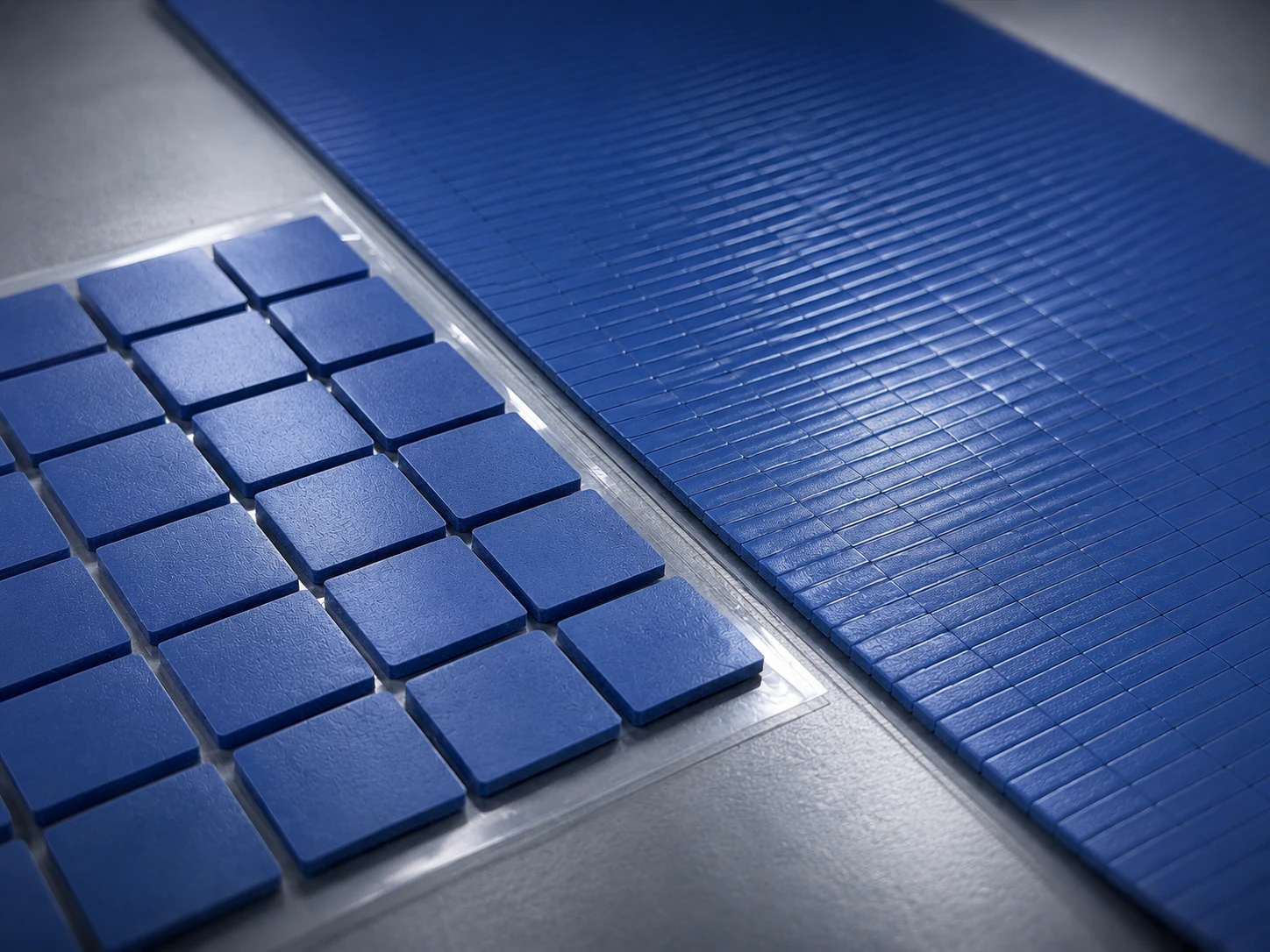
Thermal management assemblies combine die-cut thermal pads, graphite heat spreaders, insulation and protective layers, thermal tapes, and adhesive-backed constructions into application-specific component stack-ups. Components can be supplied in sheets, sets, kits, liner-backed formats, or assembly-ready configurations according to drawing geometry, bonding area, handling, and installation requirements. Each project is configured around the required layer construction, part shape, liner presentation, assembly position, and downstream handling conditions.
Custom thermal and insulation components configured for placement, handling, bonding, and OEM assembly.
Die-cut thermal pads, graphite heat spreaders, insulation and protective layers
Thermal tapes and adhesive-backed constructions for defined assembly positions
Sheets, sets, kits, liner-backed, or assembly-ready formats
Target Industries
This component category supports OEM manufacturing programs across the following industries.
Typical Applications
Representative application scenarios for this component category in OEM assemblies.
APP_01
Thermal interface pads
APPLICATION REFERENCE
APP_02
Graphite heat spreaders
APPLICATION REFERENCE
APP_03
Battery thermal insulation parts
APPLICATION REFERENCE
APP_04
Power module thermal pads
APPLICATION REFERENCE
APP_05
High-density electronics heat dissipation components
APPLICATION REFERENCE
Related Manufacturing Capabilities
This product is supported by the following Labelsun manufacturing capabilities.
Material Converting & Specifications
Thermal pads, graphite sheets, insulation and protective layers, thermal tapes, adhesive-backed constructions, and release liners are reviewed as a component stack according to geometry, bonding area, handling, and assembly conditions.
SPECIFICATION REFERENCE
Review Material Converting CapabilitiesRelated Case Studies
Engineering examples from OEM programs involving thermal management assembly manufacturing solutions.
Discuss Your Thermal Management Assembly Requirements
Share your drawings, specifications, or assembly requirements for an engineering evaluation. We review material selection, converting feasibility, DFM considerations, and manufacturing strategy for your program - from prototype validation through volume production.